Most common myths about car batteries and what is actually true
Car batteries are surrounded by outdated information, informal advice, and popular beliefs that do not always reflect the technical reality of modern vehicles. Many of these myths lead drivers to choose the wrong battery, delay replacement, or misinterpret electrical warning signs. In this article, you will understand the most common myths about automotive batteries and what is truly correct from a technical perspective.
Does a car battery always last 5 years?
No. Battery lifespan is not fixed.
This is one of the most repeated myths. In practice, a car battery lasts on average between 2 and 4 years, depending on usage and vehicle conditions.
Factors that directly influence lifespan include:
- Regional climate
- Daily vehicle use
- Number of engine starts
- Alternator condition
- Vehicle electrical consumption
This topic is explored in more detail in the article: How long does a car battery last?, which explains why durability varies so much from one vehicle to another.
If the car is running, is the battery good?
Not necessarily.
While the car is running, the alternator supplies power to the electrical system. This can mask a battery that is already weak.
Common situations include:
- The car runs normally while driving
- It struggles to start after being parked
- It fails mainly in the morning or after long periods without use
This scenario is often mistaken for a temporary issue, when in fact it indicates a loss of battery efficiency.
Does a battery only discharge when it is old?
No. New batteries can also discharge.
Another common myth is linking fast discharge only to battery age. Even new batteries can lose charge quickly.
Frequent causes include:
- Parasitic drain
- Vehicle left parked for long periods
- Alternator failure
- Incorrectly installed accessories
These situations are explained in detail in the article: Why does the battery discharge quickly?
Is higher amperage always better?
No. The battery must be compatible with the vehicle.
Many people believe that installing a higher-amp battery always improves performance. In reality, the battery must match the vehicle manufacturer’s specifications.
Possible problems caused by incorrect amperage include:
- Overloading the electrical system
- Accelerated battery wear
- Overheating of components
- Increased stress on the alternator
- Failures in electronic modules
- Impact on the ECU control unit
- Issues with injection, airbag, automatic transmission modules, and others
- Overheating, swelling, and acid leakage from the battery
Choosing the correct battery is also related to CCA, as explained in the content: What is battery CCA?
Does a weak battery only affect starting?
No. It affects the entire electrical system.
This myth causes many drivers to ignore important warning signs. A weak or low-capacity battery cannot properly support components such as air conditioning, headlights, windows, and audio systems, and may cause:
- Dim or flickering headlights
- Dashboard flashing or resetting
- Infotainment system shutting down
- Random electrical warnings
These symptoms are detailed on the page: Signs of a weak battery, and are often mistaken for more serious electronic failures.
Does driving short distances not harm the battery?
It does cause harm.
Vehicles that only make short trips do not allow the alternator to fully recharge the battery after starting.
Common consequences include:
- Battery operating constantly at partial charge
- Increased internal wear
- Reduced lifespan
This behavior is one of the main reasons for premature battery replacement in urban driving conditions.
Do well-known brands never fail?
No battery is immune to wear.
Established brands offer better quality control, but no battery is free from natural aging or harsh usage conditions.
What really makes a difference includes:
- Manufacturing technology, which influences cycle resistance and electrical stability
- Quality of internal plates, crucial for charge retention and uniform aging
- Electrical stability over time, especially in vehicles with higher energy demand
- Battery compatibility with the vehicle’s electrical design, respecting technology, amperage, and application type
At Tudor, these criteria are applied through specific automotive battery lines developed for different vehicle types and electrical demand levels, such as Light Automotive, EFB, AGM, and Heavy Duty lines.
Batteries produced with rigorous industrial processes and correctly specified for each application deliver more predictable electrical behavior, greater long-term stability, and better use of their service life, reducing premature failures even under severe operating conditions.
In summary, the main myths about car batteries include:
- Believing every battery lasts a fixed amount of time
- Thinking a new battery cannot discharge
- Assuming higher amperage is always better
- Ignoring electrical warnings believing they are electronic system faults
- Believing short driving distances do not affect the battery
If you still have questions about battery operation or choosing the ideal battery for your vehicle, contact Tudor. A specialized technical service can help you select the correct specification.
Read also

What happens when a car sits unused for a long time?
Not every vehicle is driven long distances every day. Many people own a second car, use their vehicle only on weekends, or leave it unused during extended trips. Although this situation may seem harmless, long periods without use can directly affect the automotive battery. Even with the engine turned off, some vehicle systems continue to consume power, and the battery itself naturally loses charge over time. If this period is prolonged, the risk of discharge, sulfation, and reduced service life increases significantly. Understanding what happens when a car remains unused for a long time helps preserve the battery and avoid surprises when it is time to use the vehicle again.
Continue reading
Automotive battery and alternator: what is the relationship between them?
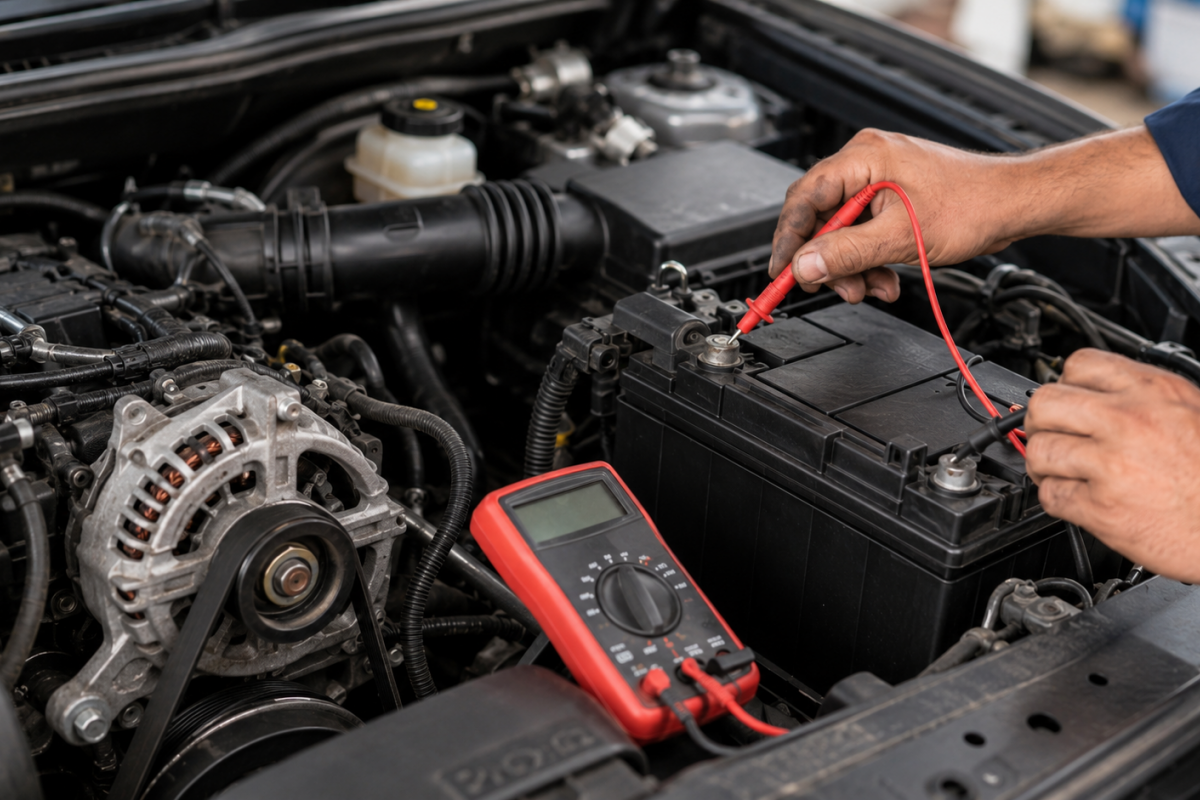
It is common for a driver to experience difficulty starting, find the battery dead, and quickly conclude that it is time to replace it. However, the problem is not always the battery. The battery and the alternator work together to keep the vehicle's electrical system running correctly. When one of these components fails, the other ends up being affected as well, which can generate very similar symptoms and make diagnosis difficult. Therefore, understanding how the battery and alternator work together is essential to identify the source of possible failures and ensure that the electrical system operates safely and efficiently. When the battery needs to be replaced, it is also important to check whether the charging system is operating correctly to preserve the performance of the new component.
Continue reading

How temperature influences the useful life of the automotive battery
The automotive battery is constantly exposed to different environmental conditions. In some regions, intense heat predominates for much of the year. In others, lower temperatures become a challenge for the vehicle's electrical system. Although many drivers associate battery problems only with usage time, temperature is one of the factors that most influences its durability and performance. Both excessive heat and intense cold affect the chemical reactions that take place inside the battery, accelerating wear processes and reducing its ability to supply energy.
Continue reading