Highlights
Automotive Battery
Signs of a Weak Battery: 5 Symptoms That Indicate It’s Time to Replace It
Automotive Battery
What is the best car battery? Learn how to choose the right one
Recent
Motorcycle Batteries
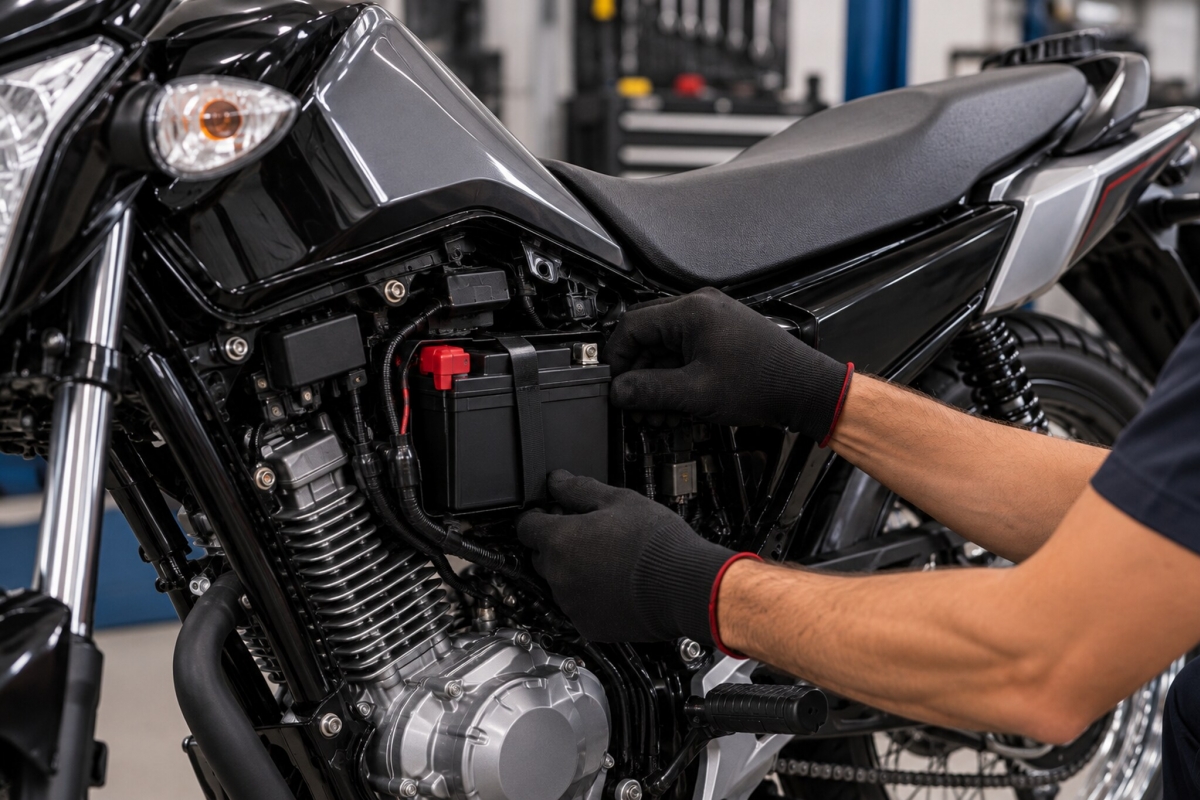
Ideal battery for Honda CG 160: correct capacity and specifications
The ideal battery for the Honda CG 160 is a 12V sealed battery, with the low-capacity rating specified in the manual for your version, designed to power the motorcycle's electronic fuel injection and electric starter with stable voltage.
The CG is the best-selling motorcycle in Brazil - and the one most likely to have its battery replaced in a hurry, with the first model available at the counter. The problem: the wrong capacity or unsuitable technology can lead to starting failures and unstable electronics.
This guide covers what the CG 160 requires, how to confirm the exact specification, and the mistakes that shorten the life of a new battery.
Continue reading
Automotive Batteries
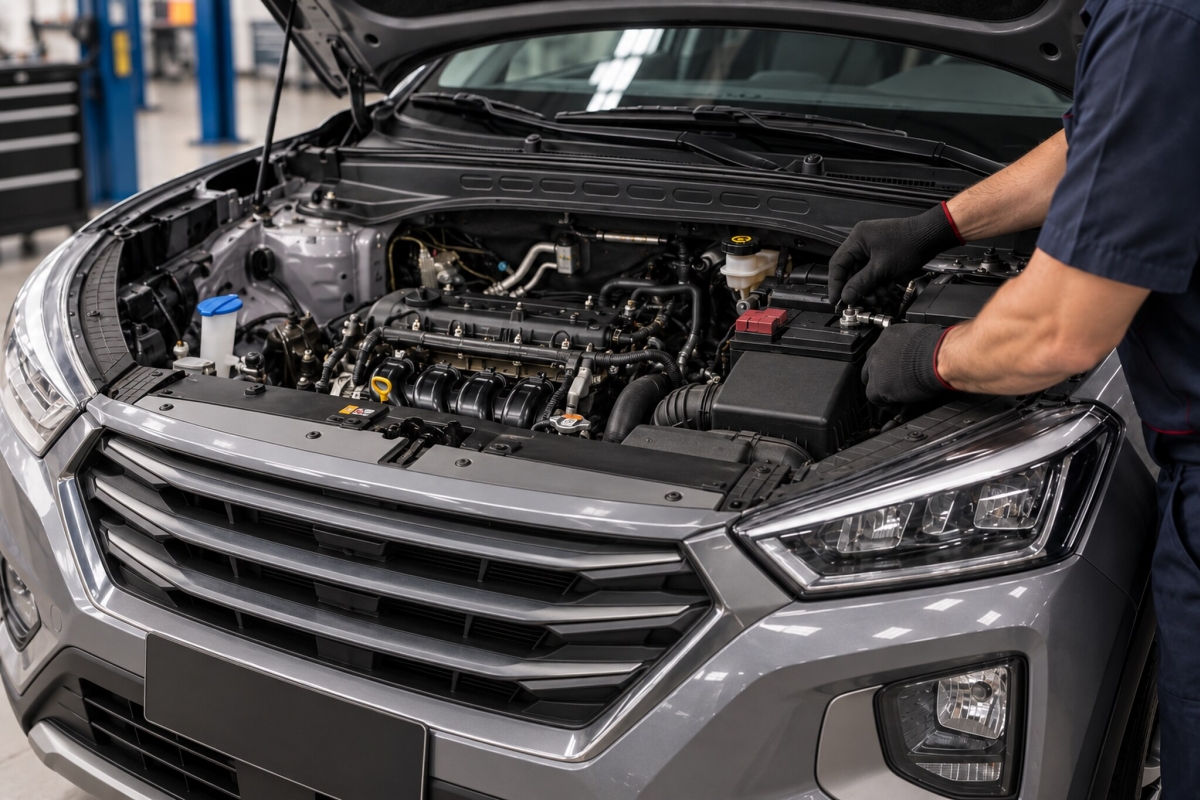
Best battery for Hyundai Creta: compatibility guide
The best battery for the Hyundai Creta is the one that follows the specification for your version in the owner's manual: the correct capacity and CCA, compatible polarity and dimensions for the battery tray - and, for versions equipped with a start-stop system, the appropriate technology (EFB or AGM), since a conventional battery cannot withstand this operating condition.
The Creta is one of the best-selling SUVs in the country, with different generations and engine configurations on the road - and this variety is precisely what can lead to the wrong battery being purchased when it is time for a replacement.
This guide organizes the selection process: what the Creta requires, what changes between versions, and how to confirm battery compatibility before making a purchase.
Continue reading

Tractionary Batteries
Types of tractionary batteries: complete guide by technology and application
Types of tractionary batteries are organized by assembly format - 2V cells combined in custom-built battery cases or ready-to-use monoblocs - and by construction technology, dominated by flooded lead-acid batteries with high-antimony grids, designed for daily deep discharge.
In practice, the right type starts with the equipment: the nominal voltage, available compartment, and operating conditions determine the configuration - not the other way around.
This guide presents each type, its typical applications, and the criteria that determine the right choice.
In practice, the right type starts with the equipment: the nominal voltage, available compartment, and operating conditions determine the configuration - not the other way around.
This guide presents each type, its typical applications, and the criteria that determine the right choice.
Continue reading
Stationary Batteries
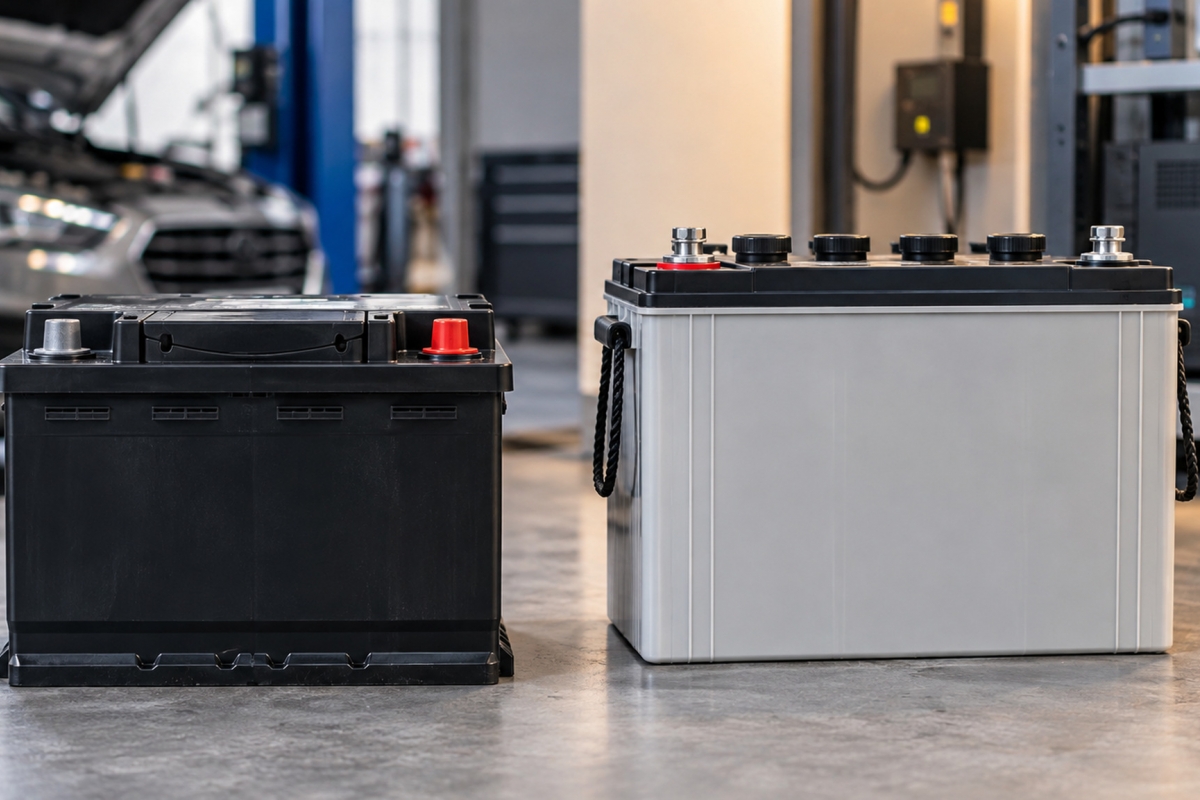
What Is the Difference Between a Stationary Battery and an Automotive Battery (Regular Battery)?
The difference between stationary and automotive batteries lies in the job each one is designed to perform: an automotive battery delivers extremely high current for a few seconds to start the engine, while a stationary battery provides gradual and continuous power for hours, supporting repeated charge and discharge cycles in fixed installations.
From the outside, the two may look identical - casing, terminals, 12V. Inside, however, they are designed for opposite purposes. And it is precisely this external similarity that leads to one of the most costly mistakes in the segment: using one in place of the other.
In this article, you'll understand the differences in construction, behavior, and application - and why each technology should be used for its intended purpose.
Continue reading

Stationary Batteries
How to Install a Stationary Battery Correctly and Safely
Properly installing a stationary battery involves four key areas: choosing a well-ventilated location protected from heat, making connections in the safe sequence with the correct torque, assembling battery banks only with identical batteries, and adjusting the charger or inverter's float voltage according to the manufacturer's manual.
Installation is the moment that determines a significant part of the battery's service life: a properly sized battery installed in a hot location or with incorrect float settings will age in a fraction of its expected lifespan.
This guide covers the complete procedure - from preparing the installation site to the final system validation.
Continue reading
Truck Batteries
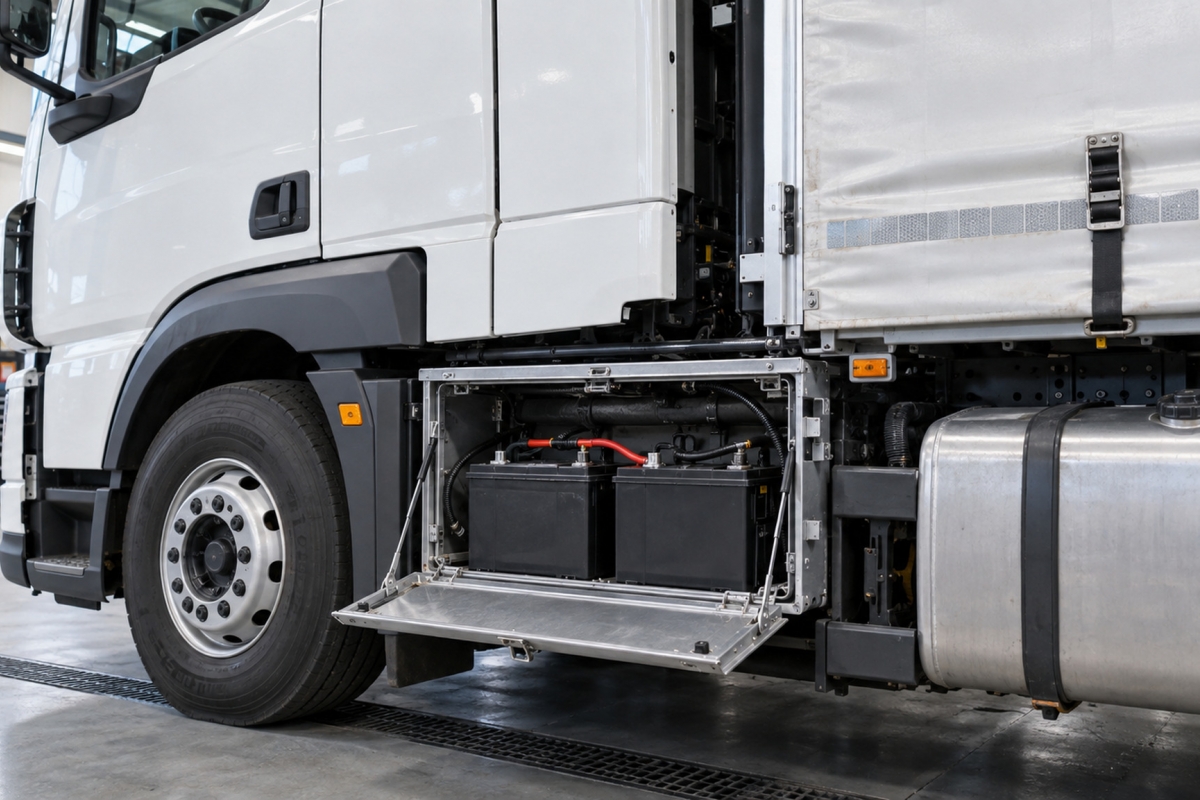
How Many Batteries Does a Truck Use? Understanding the Most Common Configurations
A truck uses one or two batteries, depending on its electrical system: light-duty vehicles and VUCs operate on 12V with a single battery, while medium-duty, medium-heavy, and heavy-duty trucks use two 12V batteries connected in series, forming a 24V system.
The number of batteries is not the driver's choice - it is a design decision made by the manufacturer, based on the engine size and the vehicle's electrical demand.
In this article, you'll understand why these two configurations exist, what changes in each one, and why, when used as a pair, the two batteries need to be treated as a single unit.
Continue reading

Truck Batteries
Checklist for Replacing a Truck Battery Without Mistakes
Replacing a truck battery without mistakes requires three steps: confirming the correct specifications before purchase (capacity, CCA, polarity, and system voltage), performing the replacement in the proper sequence - negative first when removing, positive first when installing - and checking the charging system afterward.
It may seem simple, but many of the problems unfairly attributed to a new battery actually begin during the replacement: loose mounting, improperly tightened terminals, an unbalanced pair in a 24V system, and even reversed polarity.
This checklist covers the entire process, from purchase checks to the proper disposal of the old battery.
Continue reading
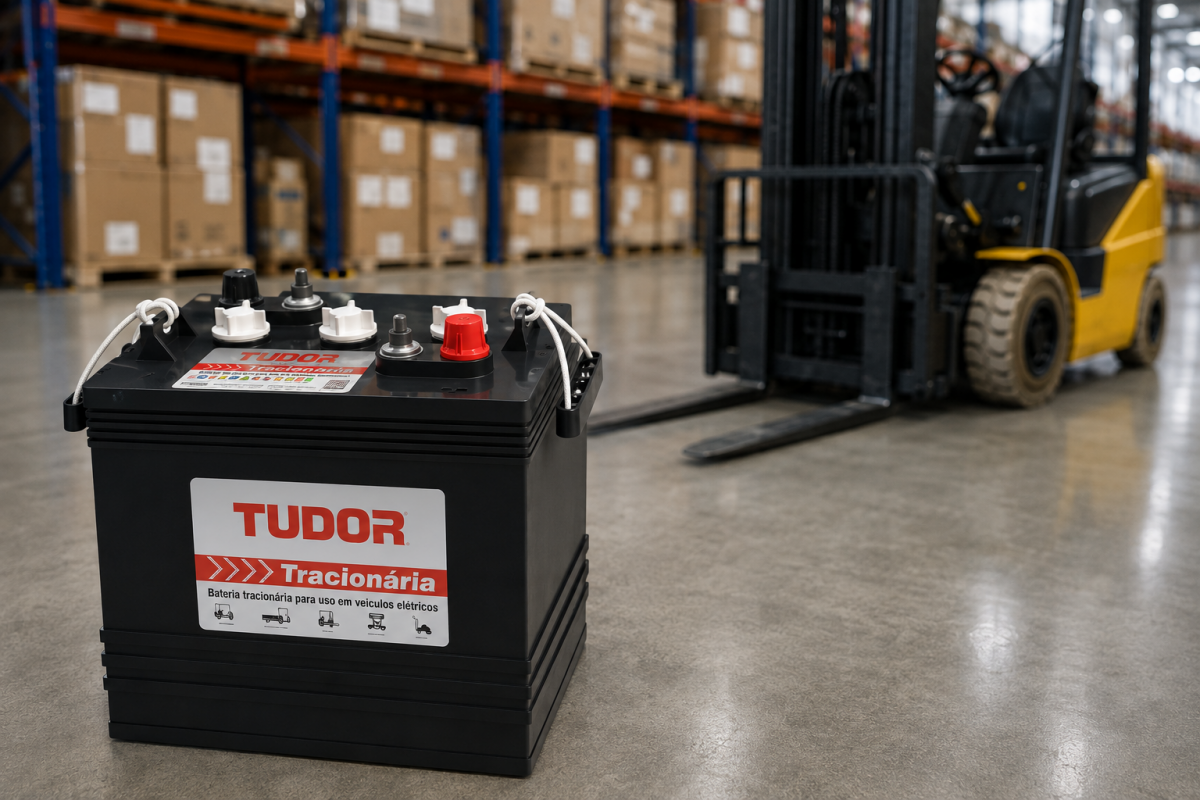
Traction Batteries
What Is a Traction Battery and Where Is It Used?
A traction battery is a deep-cycle battery designed to power industrial electric equipment: forklifts, pallet trucks, electric pallet jacks, aerial work platforms, and shunting locomotives. It discharges deeply during the work shift and then recharges, every day.
If an automotive battery is a sprinter - extremely high current for seconds - a traction battery is a marathon runner: deep cycle taken to an industrial extreme, with the equipment moving and under vibration.
In this article, you will understand how it is built, where it is used, and why maintenance determines the service life of this industrial asset.
Continue reading
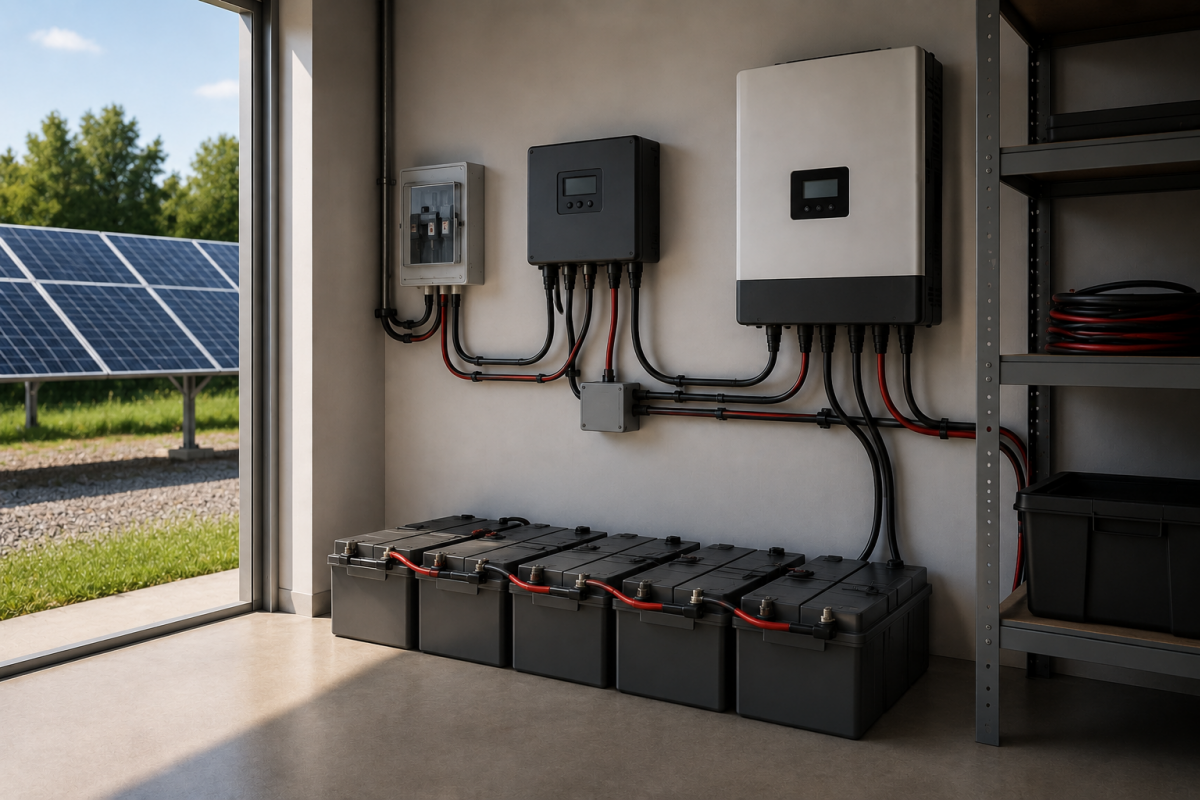
Stationary Batteries
How to Choose the Ideal Stationary Battery for Off-Grid Solar Power
The ideal stationary battery for off-grid solar power is sized in four steps: add the equipment's daily consumption, define the days of autonomy without sun, apply the recommended depth of discharge, and convert the result into capacity (Ah) at the battery-bank voltage.
In an off-grid system, there is no utility grid to back up the project: the battery is the only reserve. Tight sizing means running out of power on the second cloudy night; correct sizing means years of quiet, reliable supply.
This article walks through the calculation step by step, covering the concepts that make a difference in the result.
Continue reading
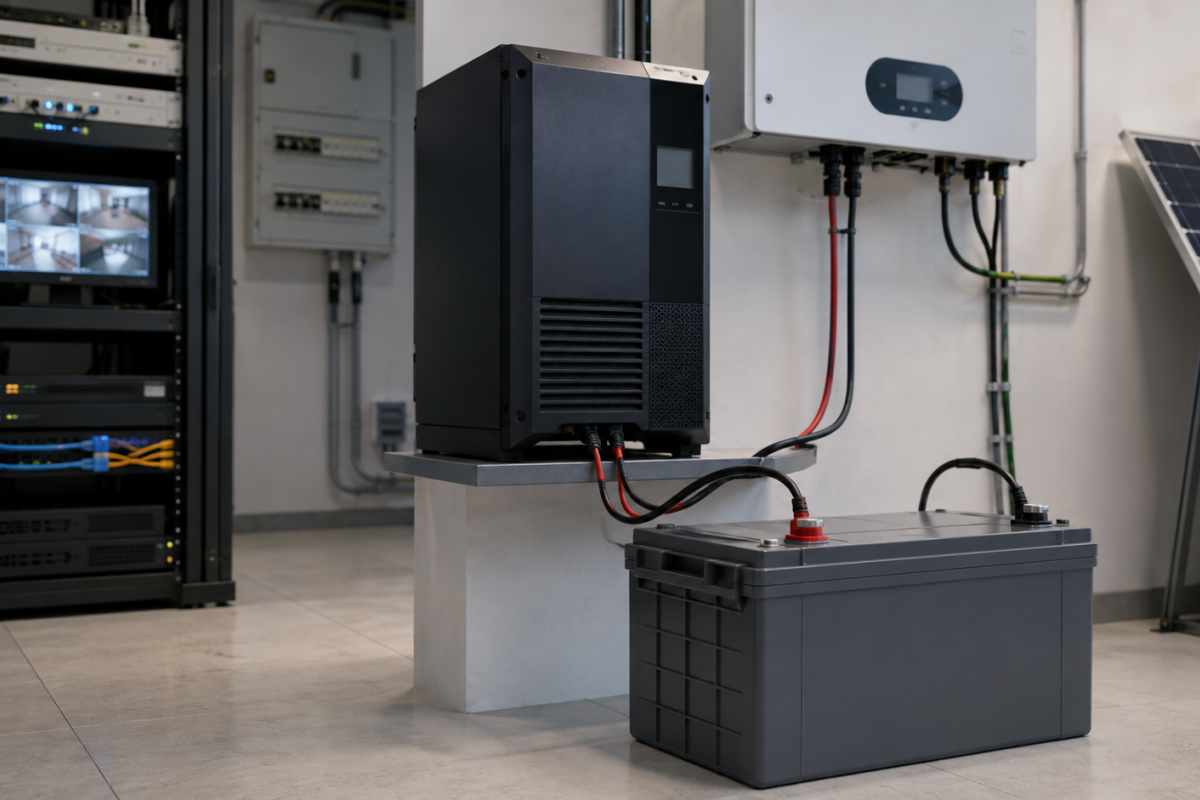
Stationary Batteries
What Is a Stationary Battery and What Is It Used For?
A stationary battery is a battery designed for fixed installations: it provides continuous or backup power and supports repeated charge and discharge cycles. It is used in solar power systems, UPS systems, telecommunications, electronic security, and emergency lighting.
The name says a lot: “stationary” because it does not move - unlike a car battery, it works in a fixed position, in a technical room, rack, or cabinet, powering systems that cannot be left without energy.
In this article, you will understand how it works, where it is used, and why it should not be confused with an automotive battery.
Continue reading