Best Battery for the Volkswagen Gol: The Exact Spec for Each Generation
The Volkswagen Gol was produced in Brazil for more than four decades and went through multiple generations, from G1 to G8. Over time, these updates brought major changes to the vehicle’s electrical system. A 1990s “Gol Quadrado” 1.8 has different technical battery requirements than a newer Gol G8 1.0 MPI. That’s why choosing the correct battery requires attention to the generation, engine, and equipment level. In this technical guide, you’ll find recommended capacity (Ah) and CCA specifications for each phase of the Gol.

What determines the correct battery for the Gol?
Your choice should follow three main criteria:
- Vehicle generation
- Engine version
- Presence of additional electrical accessories
Electrical engineering evolved over the years. Older models mainly demand starting power. Newer versions require greater voltage stability to support electronic modules and comfort systems.
Technical specs by generation
Below are the ranges typically recommended for each generation. Always confirm the exact information in your owner’s manual for your specific trim/version.
| Gol Generation | Production Years | Engine Options | Capacity (Ah) | Minimum CCA |
|---|---|---|---|---|
| Gol G1 (“Square”) | 1980–1994 | 1.0 / 1.6 / 1.8 / 2.0 | 45Ah–60Ah | 330A–450A |
| Gol G2 (“Round”) | 1994–2003 | 1.0 / 1.6 / 1.8 / 2.0 | 45Ah–60Ah | 330A–450A |
| Gol G3 / G4 | 1999–2014 | 1.0 / 1.6 / 1.8 / 2.0 | 45Ah–60Ah | 330A–450A |
| Gol G5 / G6 | 2008–2016 | 1.0 / 1.6 | 50Ah–60Ah | 400A–510A |
| Gol G7 / G8 | 2016–2023 | 1.0 MPI / 1.6 MSI | 50Ah–60Ah | 440A–520A |
Why is CCA so important on newer generations?
On early generations, the battery was mainly required for starting and lighting.
From the G5 onward, more electronics increased sensitivity to voltage drop during engine start.
Insufficient CCA can:
- Still allow the engine to start
- Cause excessive voltage drop
- Restart the infotainment system
- Trigger intermittent warning lights
The full concept of CCA is explained in the article on what battery CCA means.
Physical standard and correct mounting
The Gol predominantly uses the DIN standard.
It’s important to confirm:
- Correct battery height
- Base hold-down/mounting
- Terminal position (polarity)
From the G5 onward, many versions typically use a B13 base hold-down, which provides better mechanical stability.
A poorly secured battery is exposed to excessive vibration, a factor that reduces service life, as explained in the article on mistakes that shorten battery lifespan.
Signs the Gol battery needs replacement
Symptoms vary by generation.
On older models:
- Heavy/slow cranking
- Slower starter motor operation
On newer versions:
- Infotainment rebooting
- Instrument cluster flickering
- Intermittent warning lights
Correct replacement procedures are covered in the automotive battery replacement guide.
Conclusion
In summary, the best battery for your VW Gol is the one that matches:
- Year and generation
- Engine version
- Specified capacity (Ah)
- Recommended minimum CCA
- Correct physical standard
There isn’t one single ideal battery for all versions. Each generation has its own technical requirements.
Tudor offers batteries designed to cover every stage of the Gol lineup, ensuring electrical stability and reliability.
If you’re unsure which battery fits your specific Gol version, contacting Tudor’s technical team is the safest way to confirm the ideal specification.
Read also
Automotive battery price: what influences the final value
The price of an automotive battery can vary significantly, even among models that seem similar. This happens because the value does not depend only on the brand, but also on factors such as capacity, starting current, technology, and application. In practice, looking only at the lowest price can lead to the wrong choice. To buy well, the ideal approach is to understand what really changes from one battery to another and why this impacts the final value.
Continue reading
How to buy an automotive battery safely
Buying an automotive battery safely requires more than comparing prices or choosing a similar-looking model. To make the right choice, it is important to check the correct application, the battery specifications, and the product’s origin. When this analysis is not done, the risk of buying an incompatible battery increases, with performance below expectations or lower durability in the vehicle.
Continue reading
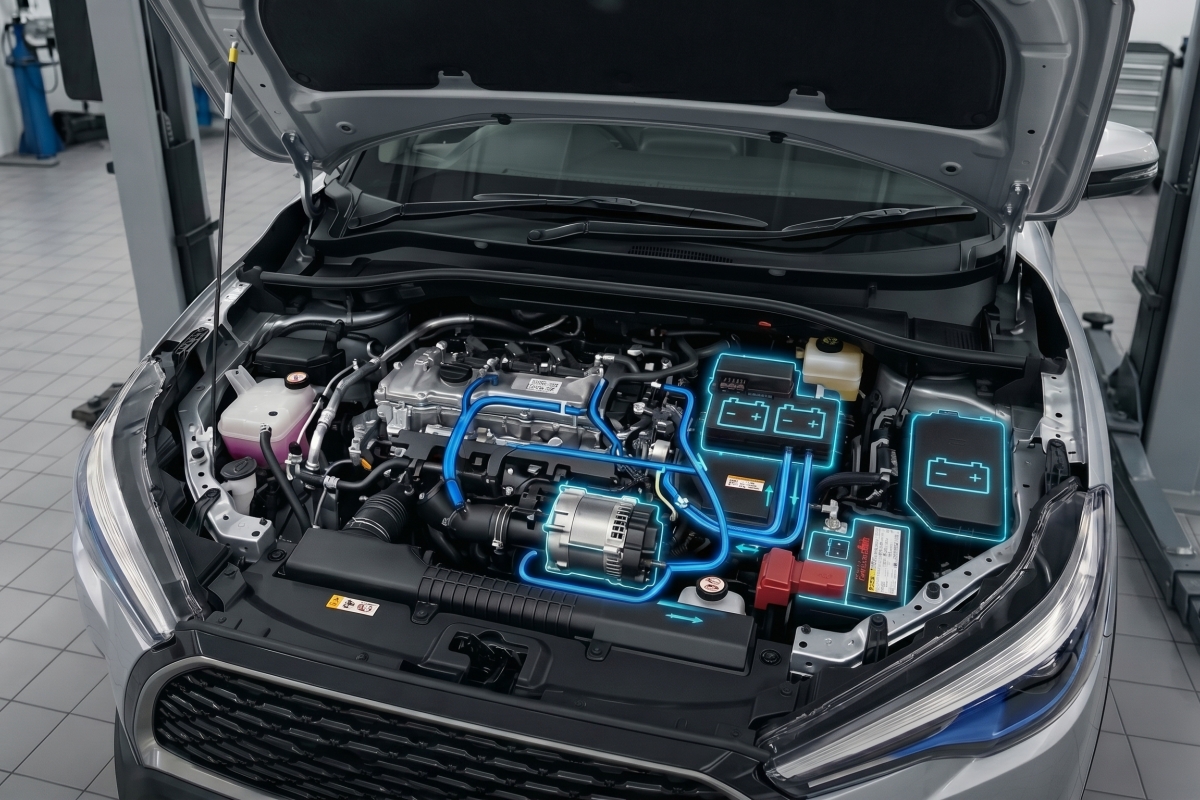
Mild Hybrid Systems (MHEV) of 48V: What changes in the battery?
Understand how 48V mild hybrid systems (MHEV) work, their interaction with the traditional 12V battery, and the electrical care these cars require.
Continue reading